shineandshape
Introduction
Modern life rarely slows down. Between work responsibilities, endless notifications, family commitments, and the constant stream of information competing for our attention, it’s easy to feel mentally exhausted before the day is even over. Many people recognize the importance of reducing stress, improving focus, and protecting their mental wellbeing—but struggle to find the time to do so.
This is where meditation offers a surprisingly practical solution. Contrary to popular belief, meditation doesn’t require hours of silence, a remote retreat, or years of experience. In fact, just five focused minutes each day can help calm the mind, improve emotional awareness, and establish healthier mental habits over time.
The secret isn’t meditating longer—it’s meditating consistently.
This guide introduces beginners to meditation through a simple five-minute daily roadmap, explains the science behind the practice, addresses common misconceptions, and provides actionable strategies for building a sustainable habit that supports long-term wellbeing.
What Is Meditation?
The Science Behind Meditation
Meditation is the practice of intentionally directing your attention to the present moment. Although rooted in ancient traditions, modern neuroscience has extensively studied its effects on the brain and body.
Research suggests that consistent meditation may help reduce stress, improve attention, regulate emotional responses, and enhance overall psychological resilience. Rather than emptying the mind, meditation trains it to respond more thoughtfully instead of reacting automatically.
Like physical exercise strengthens muscles, meditation strengthens mental awareness.
Common Misconceptions About Meditation
Many beginners avoid meditation because they believe they must stop thinking completely.
This is one of the biggest myths.
Thoughts will naturally appear during meditation. The goal isn’t to eliminate them but to notice them without judgment and gently return your attention to your chosen point of focus.
Meditation is not about perfection—it’s about practice.
Why Just Five Minutes Can Make a Difference
Building Consistency Over Duration
A five-minute session may seem insignificant, but consistency matters far more than length.
Starting with a manageable routine reduces resistance and makes daily practice easier to maintain. As the habit becomes established, many people naturally choose to meditate longer.
Small actions repeated daily often produce remarkable long-term results.
The Compound Effect of Daily Practice
Meditation works much like saving money.
One deposit rarely changes your financial future, but consistent deposits accumulate over time. Similarly, five minutes of daily mindfulness gradually strengthens focus, patience, emotional regulation, and self-awareness.
Progress comes from repetition rather than intensity.
Preparing for Your Meditation Session
Choosing a Quiet Space
A peaceful environment minimizes distractions and helps your mind settle more quickly.
This doesn’t require a perfectly silent room. A comfortable corner of your home, a park bench, or even your parked car can become an effective meditation space.
Consistency in location can reinforce the habit.
Finding a Comfortable Position
Comfort encourages focus.
Sit on a chair with both feet on the floor, cross your legs on a cushion, or kneel comfortably if preferred. Keep your spine upright while allowing your shoulders to relax.
Avoid positions that create unnecessary tension.
Sitting vs. Standing Meditation
Although seated meditation is most common, standing meditation can be equally effective, especially for people who become sleepy while sitting.
The best posture is one you can maintain comfortably.
Eliminating Common Distractions
Before beginning:
- Silence your phone.
- Close unnecessary computer tabs.
- Inform others if you need uninterrupted time.
- Adjust room temperature if possible.
Removing distractions before meditation prevents unnecessary interruptions.
The 5-Minute Meditation Roadmap
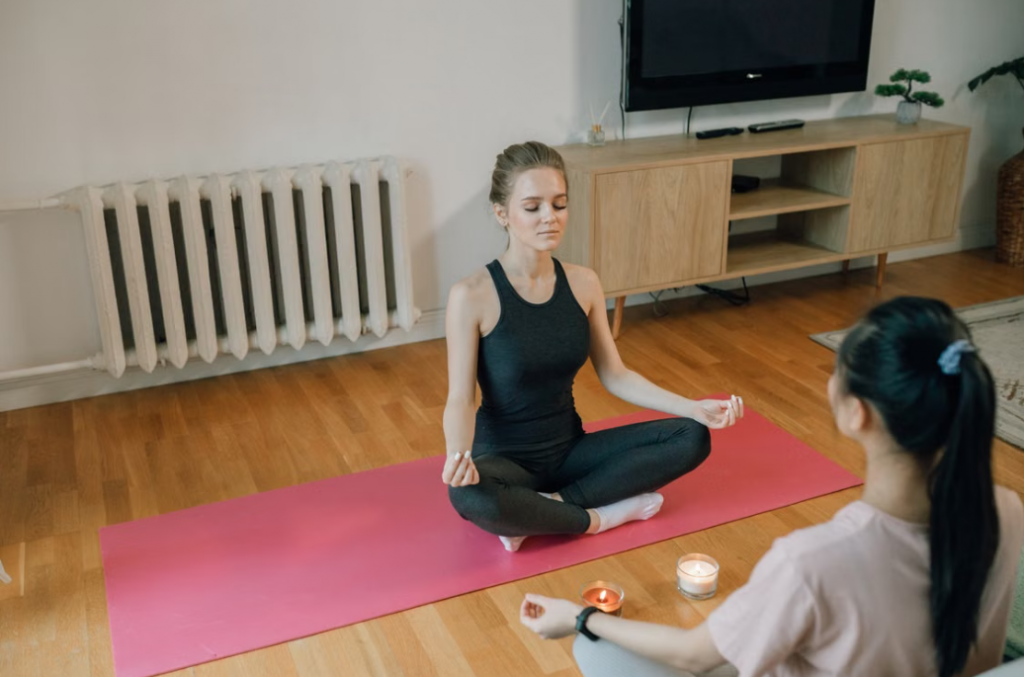
Minute 1: Settle and Breathe
Begin by closing your eyes or lowering your gaze.
Take several slow, deep breaths, allowing your body to relax naturally.
Simply notice your breathing without trying to change it.
Minute 2: Focus on the Breath
Shift your full attention to each inhale and exhale.
Notice the sensation of air entering your nose, expanding your lungs, and leaving your body.
Your breath becomes an anchor to the present moment.
Minute 3: Observe Your Thoughts
Thoughts will appear.
Instead of resisting them, imagine them as clouds drifting across the sky.
Observe each thought briefly, then gently return your attention to your breathing.
Awareness—not control—is the objective.
Minute 4: Return to the Present
As your mind wanders, continue bringing your attention back to your breath.
Each return strengthens your ability to focus, much like every repetition strengthens a muscle during exercise.
The act of returning is where growth occurs.
Minute 5: Reflect and Reset
Before ending the session, notice how your body and mind feel.
Take one final deep breath and set a simple intention for the rest of your day, such as remaining patient, focused, or grateful.
Carry this calm awareness into your next activity.
Common Challenges for Beginners
Wandering Thoughts
Mind wandering is completely normal.
Even experienced meditators experience distractions. Every time you gently redirect your attention, you’re strengthening your mindfulness practice.
Progress should never be measured by the absence of thoughts.
Restlessness and Impatience
Many beginners feel uncomfortable sitting still.
Rather than viewing discomfort as failure, recognize it as part of the learning process.
Patience grows through repeated practice.
Tips for Building a Daily Meditation Habit
Pair Meditation with Existing Routines
Habits become easier when attached to existing behaviors.
Try meditating:
- After brushing your teeth.
- Before drinking your morning coffee.
- After finishing work.
- Before going to bed.
These routine connections increase consistency.
Tracking Your Progress
Use a calendar or habit tracker to record each completed meditation session.
Visible progress reinforces motivation and encourages long-term commitment.
Remember, consistency matters more than perfection.
Benefits of Regular Meditation
Mental Wellbeing
Consistent meditation may help:
- Reduce perceived stress.
- Improve concentration.
- Increase emotional awareness.
- Support better decision-making.
- Encourage greater resilience during challenging situations.
These benefits often develop gradually through regular practice.
Physical Health
Meditation may also support physical wellbeing by promoting relaxation and improving sleep quality.
Lower stress levels can positively influence overall health, energy levels, and daily functioning.
Mind and body work together more closely than many people realize.
Mistakes to Avoid
Common beginner mistakes include:
- Expecting immediate transformation.
- Judging yourself for having thoughts.
- Skipping sessions after missing one day.
- Constantly changing meditation techniques.
- Meditating only when feeling stressed.
The most successful meditators prioritize consistency over perfection.
Conclusion
Meditation doesn’t require extraordinary discipline or large amounts of free time. In fact, its greatest strength lies in its simplicity. By dedicating just five minutes each day to intentional breathing and mindful awareness, beginners can begin developing habits that support greater focus, emotional balance, and resilience. Like any worthwhile skill, meditation becomes more natural with practice, and its benefits often emerge gradually rather than overnight.
The five-minute roadmap outlined in this guide demonstrates that meaningful personal growth doesn’t always come from dramatic changes. Sometimes, the smallest daily commitments create the most lasting transformations. By approaching meditation with patience, curiosity, and realistic expectations, you’ll discover that even a brief moment of stillness can become a powerful foundation for a calmer, healthier, and more intentional life.